A scope you can defend in a dispute
Paste the brief. The Technical Business Analyst turns it into a scope, a plan and acceptance criteria: modules, stories, tickets, an SOW and a client-ready proposal, synced to your PM tool.
Every module unlocked for 14 days. Card details at checkout, nothing charged until day 14, cancel any time before then.
Scope is a commercial document
Every scope dispute is a margin dispute. When a client says this was obviously included, the firm with a written scope, ticket level acceptance criteria and a signed SOW bills a change request. The firm with a two-page brief eats the work.
That protection normally costs a week of a senior person's time per project, which is why so many projects start without it. The Technical Business Analyst produces the breakdown as a draft you edit, so being defensible stops being the expensive option.
The real product, not mockups
Every screenshot below is the Technical Business Analyst as it runs today.
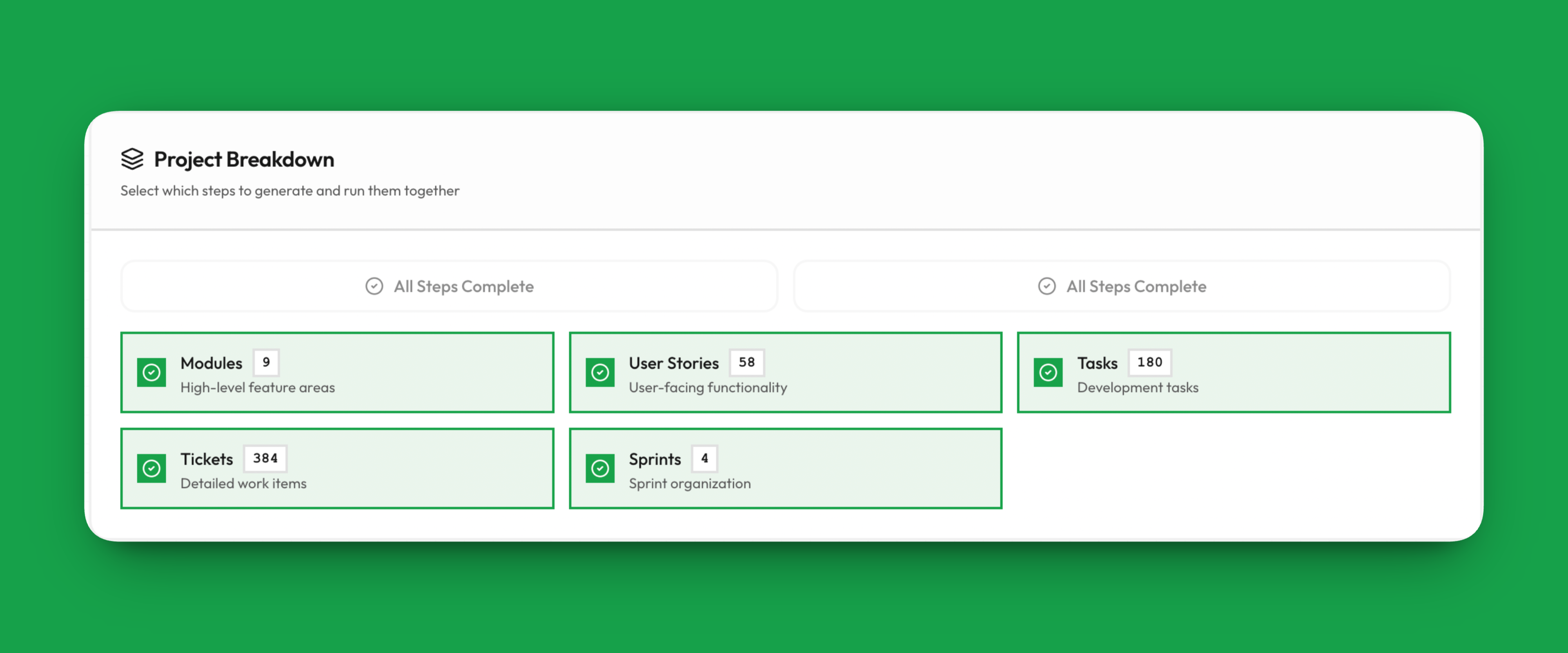
The brief becomes modules, user stories, tasks, tickets and sprints: a full breakdown you edit rather than author.
How it works
From brief to a plan the team can start on
Drop in the brief
A client brief, an RFP, or the PRD draft that Client Discovery collected. Any starting point works.
Answer what is missing
Gaps become clarifying questions before the breakdown is produced, so the scope rests on answers.
Edit, send, sync
Review the breakdown, generate the SOW and proposal, and sync the tickets to your PM tool.
Syncs to the PM tools you already use
The plan the client approved becomes the board the team works from
Where it sits
The Technical Business Analyst is part of the Delivery department of the Service Business OS, included on every plan. One credit allowance covers every module, so there is no per-agent pricing and no surprise line items.
Scope the next project defensibly
The Business Analyst is live now, and it reads the same clients and projects as the rest of the OS — so the breakdown it writes is the one Projects & Time picks up.
Every module unlocked for 14 days. Card details at checkout, nothing charged until day 14, cancel any time before then.